

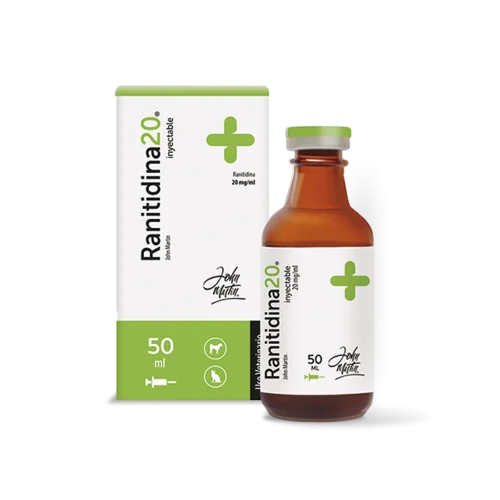
Ranitidina 20 Inyectable
Ranitidine is an H2 receptor antagonist with anti-ulcer action that reduces gastric acid secretion. Its effect is produced by blocking H2 receptors in the parietal cells, which reduces acidity and helps protect the gastric mucosa.
TARGET SPECIES
DOSAGE FORM
HOW SUPPLIED
DIFFERENTIATORS
BENEFITS AND COMPETITIVE ADVANTAGES
Can be used to start parenteral therapy and then continue orally, facilitating the therapeutic transition.
Allows control of acid secretion in acute situations.
Can be used to start parenteral therapy and then continue orally, facilitating the therapeutic transition.
TECHNICAL DETAILS
Information
COMPOSITION
– Excipients q.s. to 1 ml.
DOSAGE AND ADMINISTRATION
Dogs: 2 mg/kg, equivalent to 1 mL per 10 kg. Repeat every 12 hours.
Cats: 2.5 mg/kg, equivalent to 1 mL per 8 kg. Repeat every 12 hours.
Dosage and treatment duration may be adjusted based on the clinical picture, at the discretion of the attending veterinary professional.
- Joint Health
- Opioid Pain Management
- NSAID Pain Management
- Neuropathic Pain
- Steroidal Anti-inflammatory Drugs
- Antibiotics
- Gastrointestinal Health
- Hepatic Health
- Integrative Functional Supplementation
- Vitamins and Minerals
- Omega
- Laxatives
- Anticholinergic – Antispasmodics
- Hemostatic Agents
- Internal Antiparasitics
- External Antiparasitics
- Hemostatic Agent
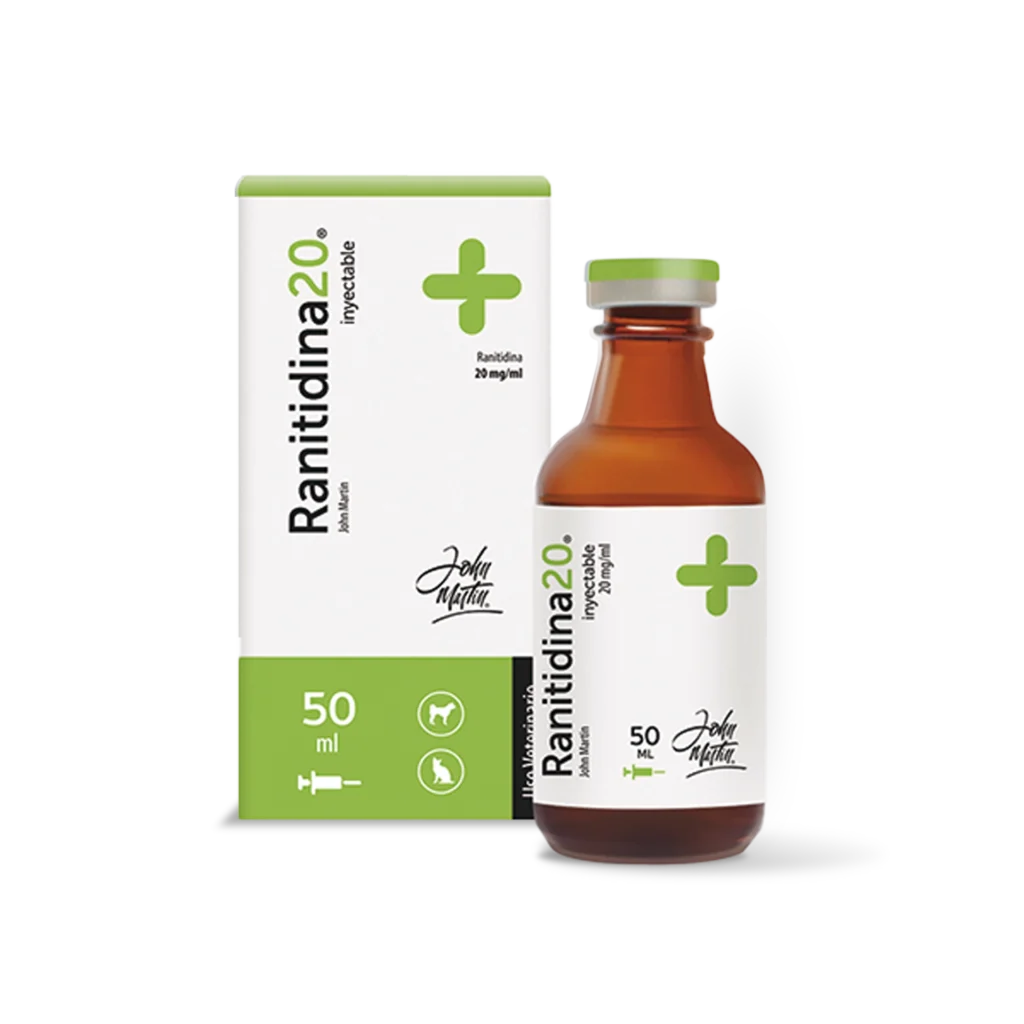
Ranitidina 20 Inyectable
TARGET SPECIES
DOSAGE FORM
HOW SUPPLIED
Ranitidine is an H2 receptor antagonist with anti-ulcer action that reduces gastric acid secretion. Its effect is produced by blocking H2 receptors in the parietal cells, which reduces acidity and helps protect the gastric mucosa.
Can be used to start parenteral therapy and then continue orally, facilitating the therapeutic transition.
Allows control of acid secretion in acute situations.
Can be used to start parenteral therapy and then continue orally, facilitating the therapeutic transition.
TECHNICAL DETAILS
Information
COMPOSITION
– Excipients q.s. to 1 ml.
DOSAGE AND ADMINISTRATION
Dogs: 2 mg/kg, equivalent to 1 mL per 10 kg. Repeat every 12 hours.
Cats: 2.5 mg/kg, equivalent to 1 mL per 8 kg. Repeat every 12 hours.
Dosage and treatment duration may be adjusted based on the clinical picture, at the discretion of the attending veterinary professional.